What we are
An educational platform, learning-management system, knowledge repository, private community space, and set of tools for preserving Jedi work over time.

About the project
Temple of the Jedi is an independent educational, archival, and community platform inspired by the real-world Jedi movement. We provide structure and tools for learning while respecting that Jedi individuals and Orders may understand the path differently.
An educational platform, learning-management system, knowledge repository, private community space, and set of tools for preserving Jedi work over time.
We are not a governing Jedi Order and do not claim authority over the wider Jedi movement. Participation here does not require abandoning another community, Order, school, or independent path.
Why it exists
Jedi knowledge has been created across forums, websites, Discord servers, social-media groups, personal journals, classes, and communities for decades. When those spaces close or people move on, valuable material can disappear with them.
Temple of the Jedi is designed to give that material a durable home while also providing a structured educational system for learners who want more than disconnected essays and conversations.
Our goal is to support the future of the movement by connecting education, records, contribution, and preservation. A lesson can become part of the curriculum. A historical document can remain in the Archives. A Jedi can study here without being required to join an Order.
The platform is also intended to provide a quieter private space for members who want meaningful Jedi discussion without relying entirely on public social-media environments.
Educational philosophy
Learn what you are observing. Study broadly, question assumptions, compare explanations, examine evidence, and remain willing to revise conclusions.
Learn how to participate without being ruled by impulse, fear, anger, attachment, ego, or the need to control outcomes.
Explore the relationships within and around us: the ways life, nature, consciousness, information, experience, and the unknown may interconnect.
Explore differnent spiritual methods and cultural teachings to help connect what you know to others
Boundary of Integrity: No individual or subjective definition or interpretation of the Force should override our broader understanding of how it manifests, how we experience it, and how we relate to it without sufficient substantiated evidence.
Contribute to Jedi knowledge
We are looking for experienced Jedi, educators, researchers, and subject specialists who want to share work with the wider community.
Submit a lesson, assignment, workshop, meditation, assessment, reading list, or complete course for review.
Suggest a subject we have missed. The curriculum is meant to grow through expertise rather than pretending one group already knows everything worth teaching.
Existing Jedi material does not have to be rewritten from scratch. Courses and resources can be adapted, attributed, and preserved where appropriate.
A document can be valuable even when it is not part of formal training. Historical records, essays, research, community material, and reference files can live in the Archives independently.
Philosophy, epistemology, psychology, comparative religion, history, Jedi history, linguistics, culture, ethics, conflict resolution, education, meditation, science, nature, practical skills, leadership, technology, archival work, and other relevant disciplines.
For Jedi communities and Orders
Orders and independent communities can use, reference, or adapt educational material that meets their needs. The aim is to make rigorous Jedi learning easier to share, not to place other groups under Temple authority.
A community can preserve historical material, propose lessons, share an elective, or contribute expertise while maintaining its own structure, traditions, and membership.
Free curriculum reference
The Temple of the Jedi Handbook is available as a free reference for learners, educators, and anyone exploring the Jedi path. It provides the broader background, concepts, history, philosophy, practices, and reference material that support the structured curriculum.
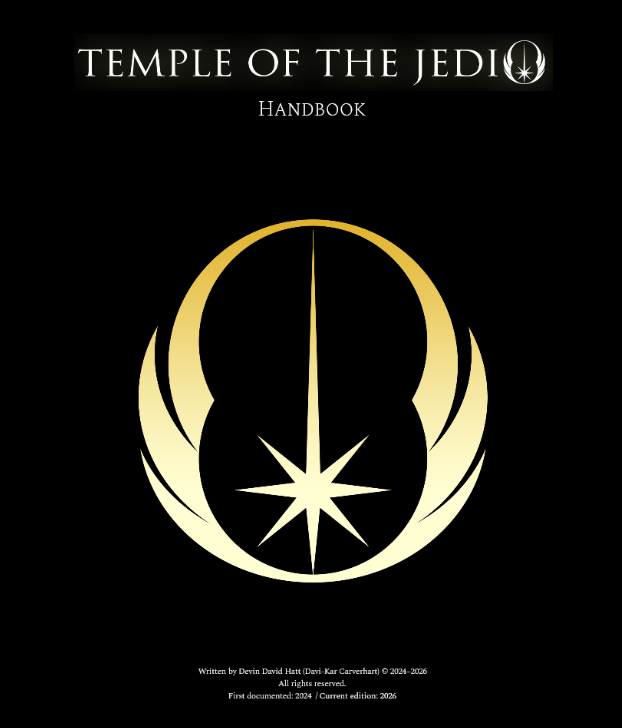
Courses and assessments provide structure, while the Handbook gives learners a larger body of material to read, compare, revisit, and use throughout their studies.
The Handbook is intended to support learning rather than replace questioning. Readers are encouraged to examine its ideas critically, compare perspectives, and treat it as a living educational resource that can continue to improve alongside the curriculum.
The current Handbook is available free through the Jedi Archives.
The Archives
The Archives are intended to preserve both historical and contemporary Jedi knowledge. Materials can be organized for learning, reference, or historical value, with access managed through the Temple platform.
Over time, we also plan to make it easier for members to preserve copies of their own forum posts, Discord discussions, journal history, and other Jedi material so it remains accessible even when the original platform changes or disappears.
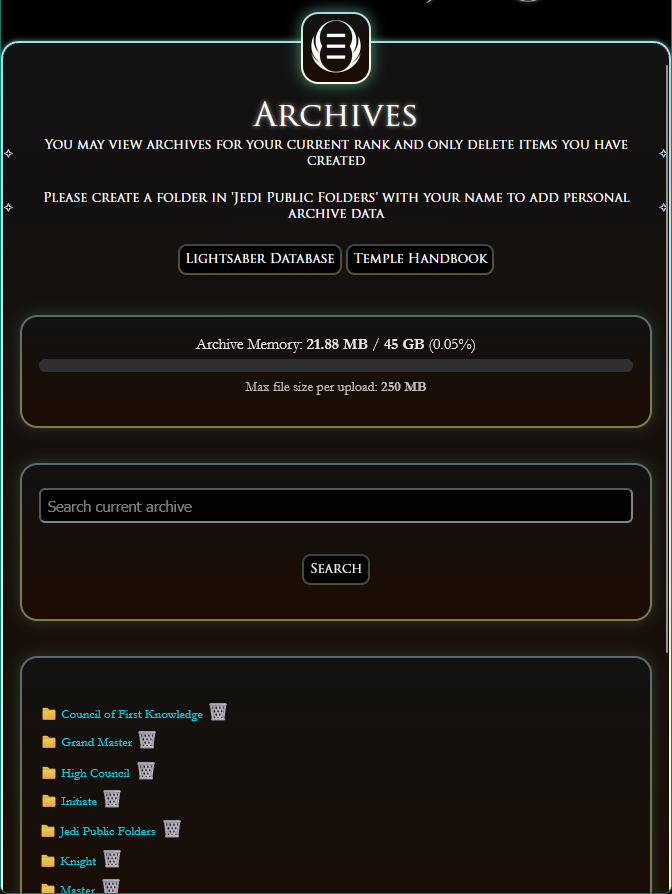
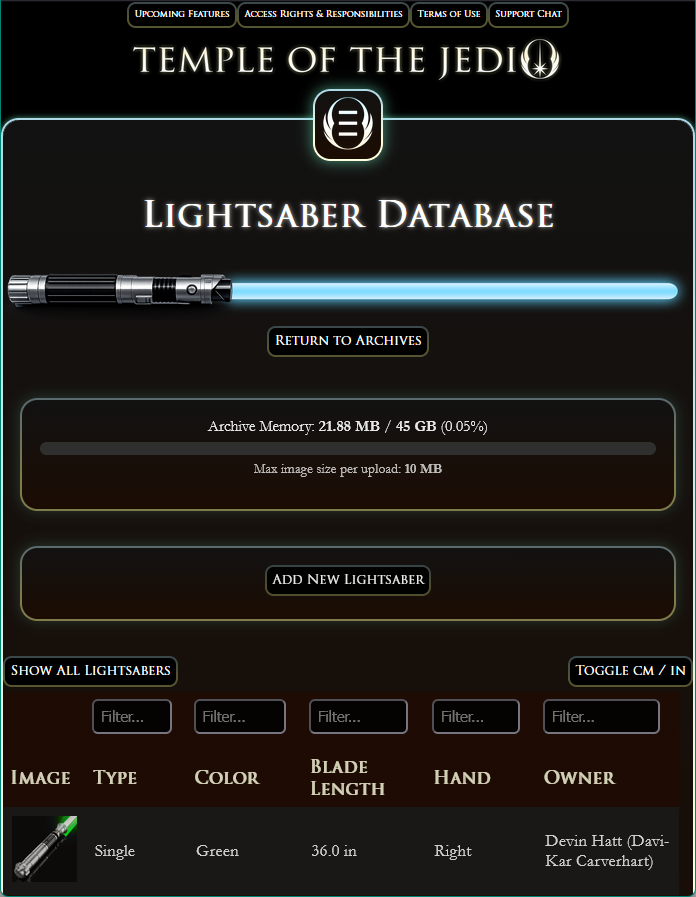
Lightsaber Database
The Lightsaber Database allows members to register their lightsabers as part of the Temple's historical and community record. It provides a dedicated place to document a saber, preserve its details, and connect that record to the Jedi who carries it.
The database is separate from curriculum progression and exists as a community, archival, and historical tool.
The platform
Instead of separating lessons, records, files, profiles, journals, and community interaction across unrelated services, the Temple connects them.
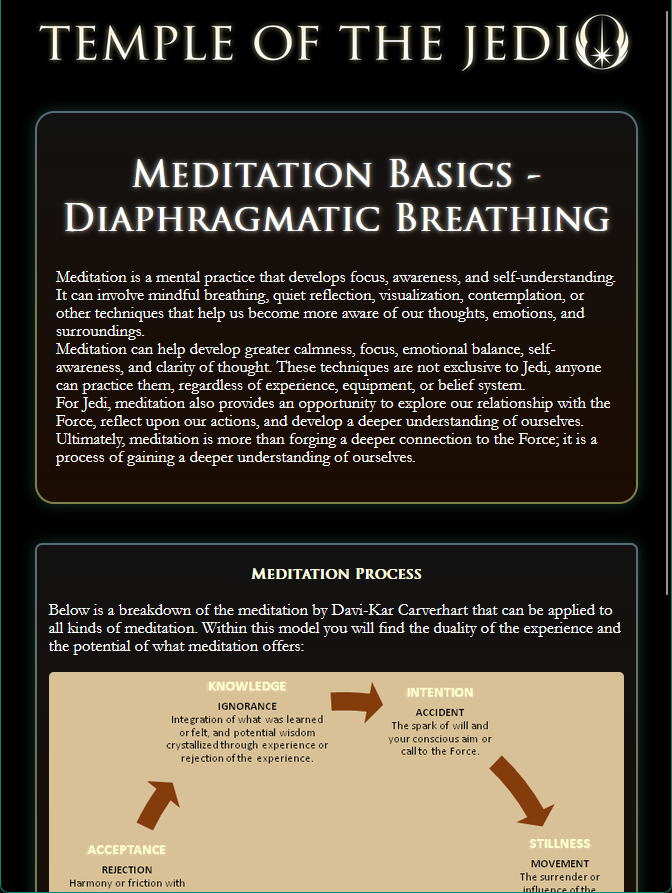
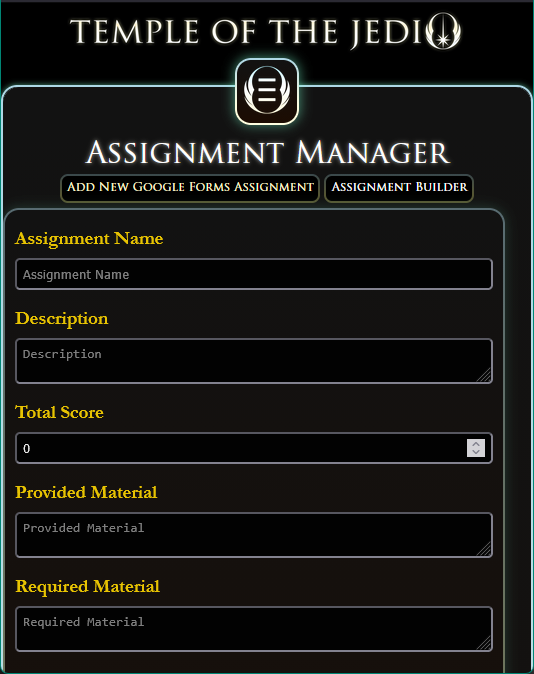
Qualified instructors can create structured lessons and assessments directly inside the system, then preview how the finished assignment will appear to learners.
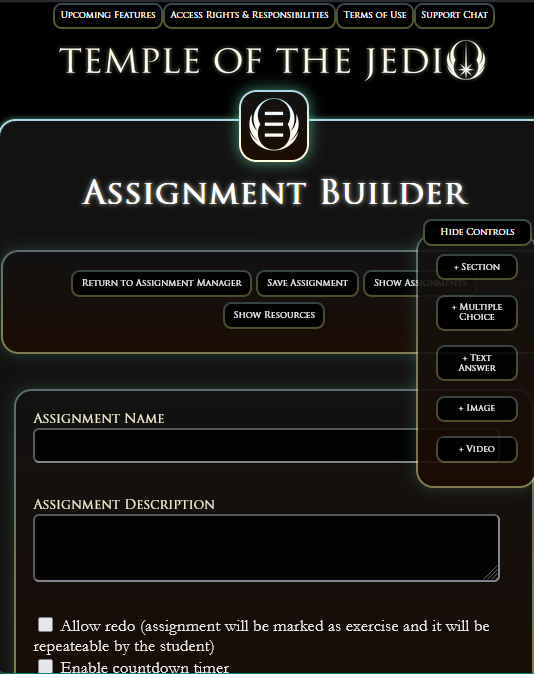
Existing Google Forms assignments can be integrated into the system. Previous completion data can be matched to a member who registers using the same email address, allowing recognized work to carry forward rather than being repeated.
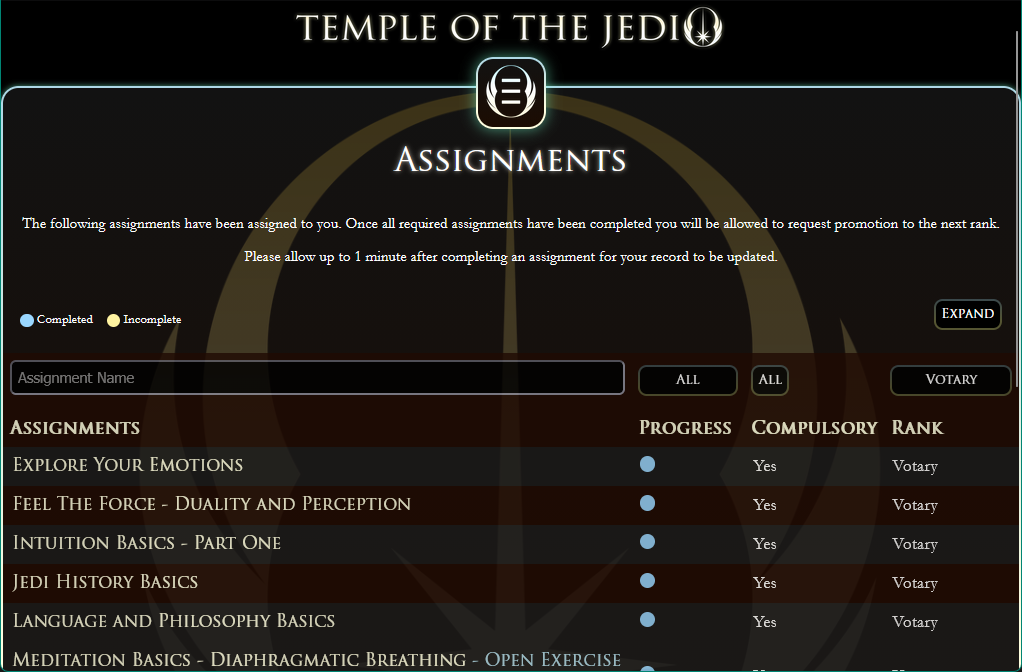
Student Records bring completed coursework and assessment results into one academic record. New Temple assignments can appear alongside recognized historical results, including existing records ingested from Google Sheets, so prior learning remains connected to the member rather than being lost or repeated.
Authorized reviewers can use the records system to view incoming results, track completed work, and maintain continuity between older coursework and the Temple's current curriculum.
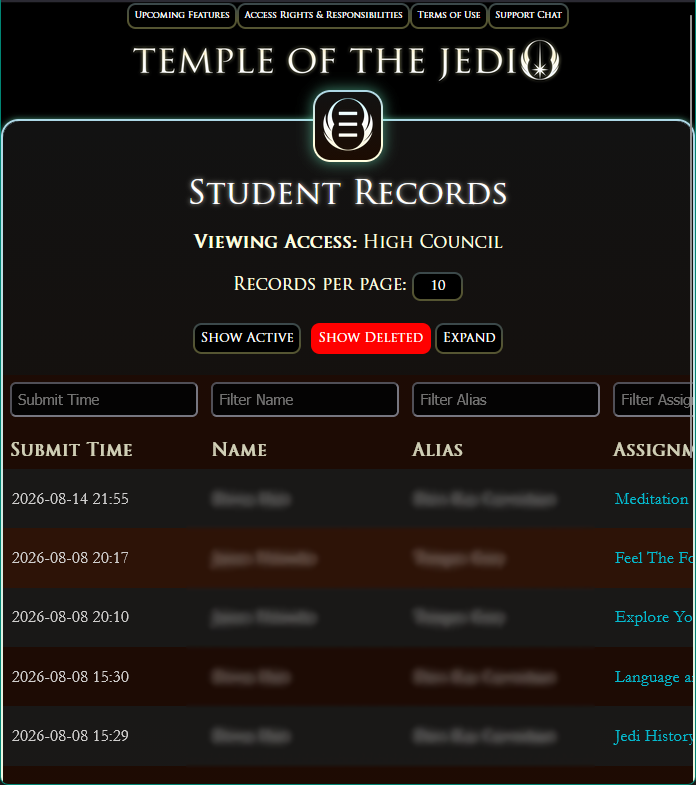
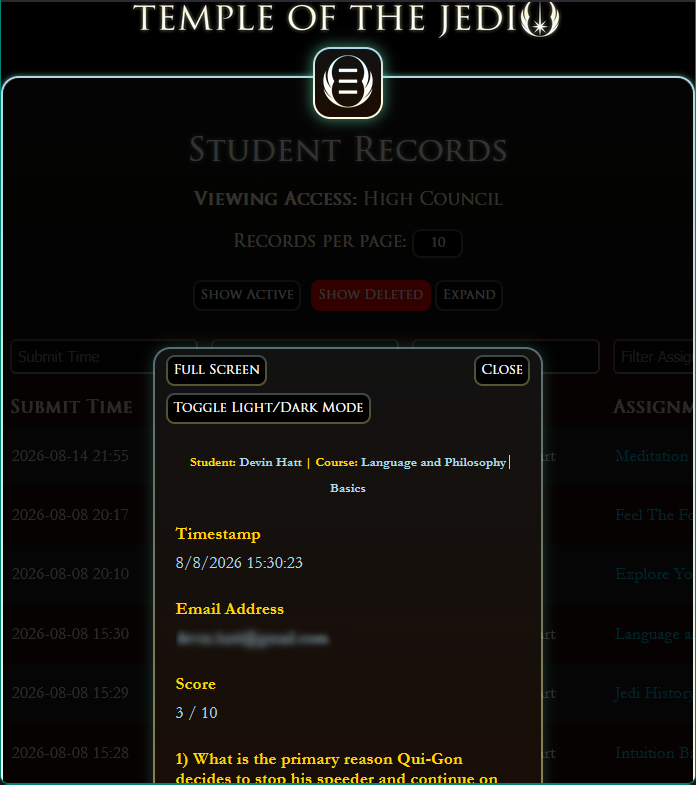
Learners can see coursework and progression while instructors and authorized reviewers can work with the academic record without losing the connection between assignment, result, and learner.
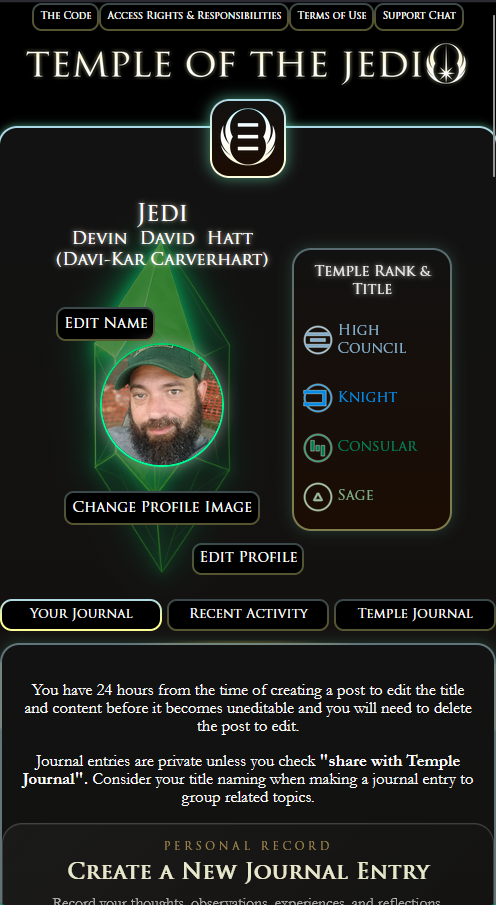
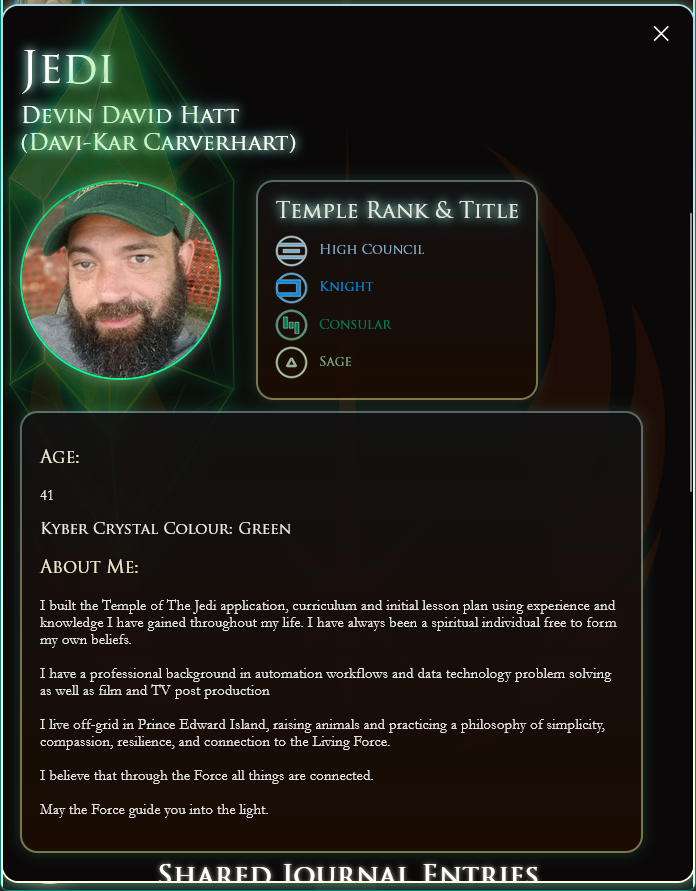
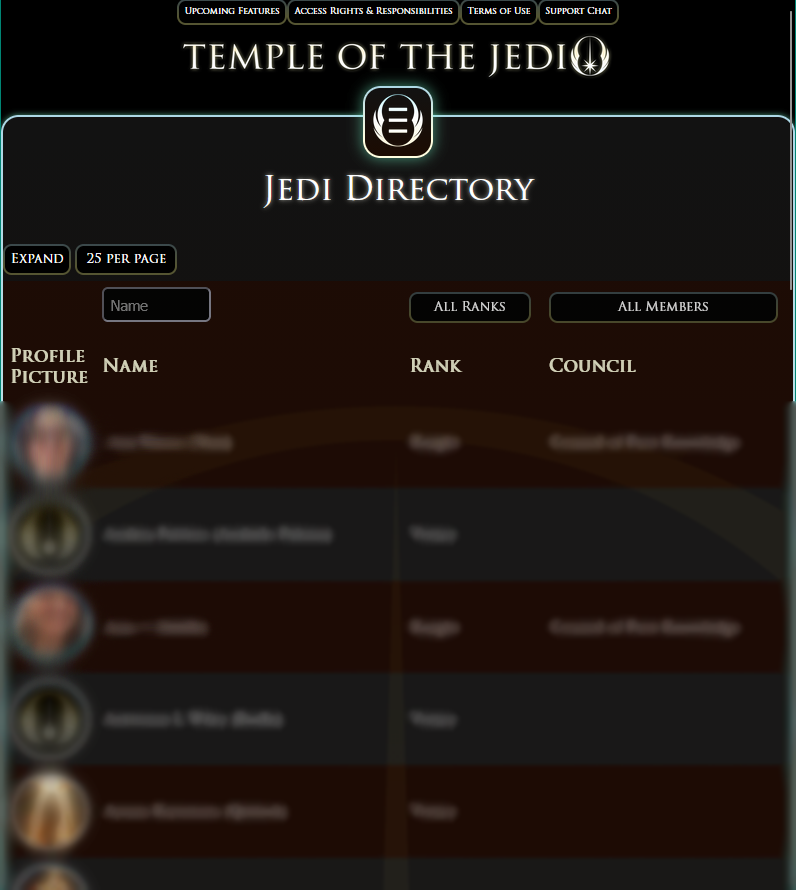
Member profiles and directory tools make it easier to understand who is participating, what they are studying, and how they connect to the wider Temple community.
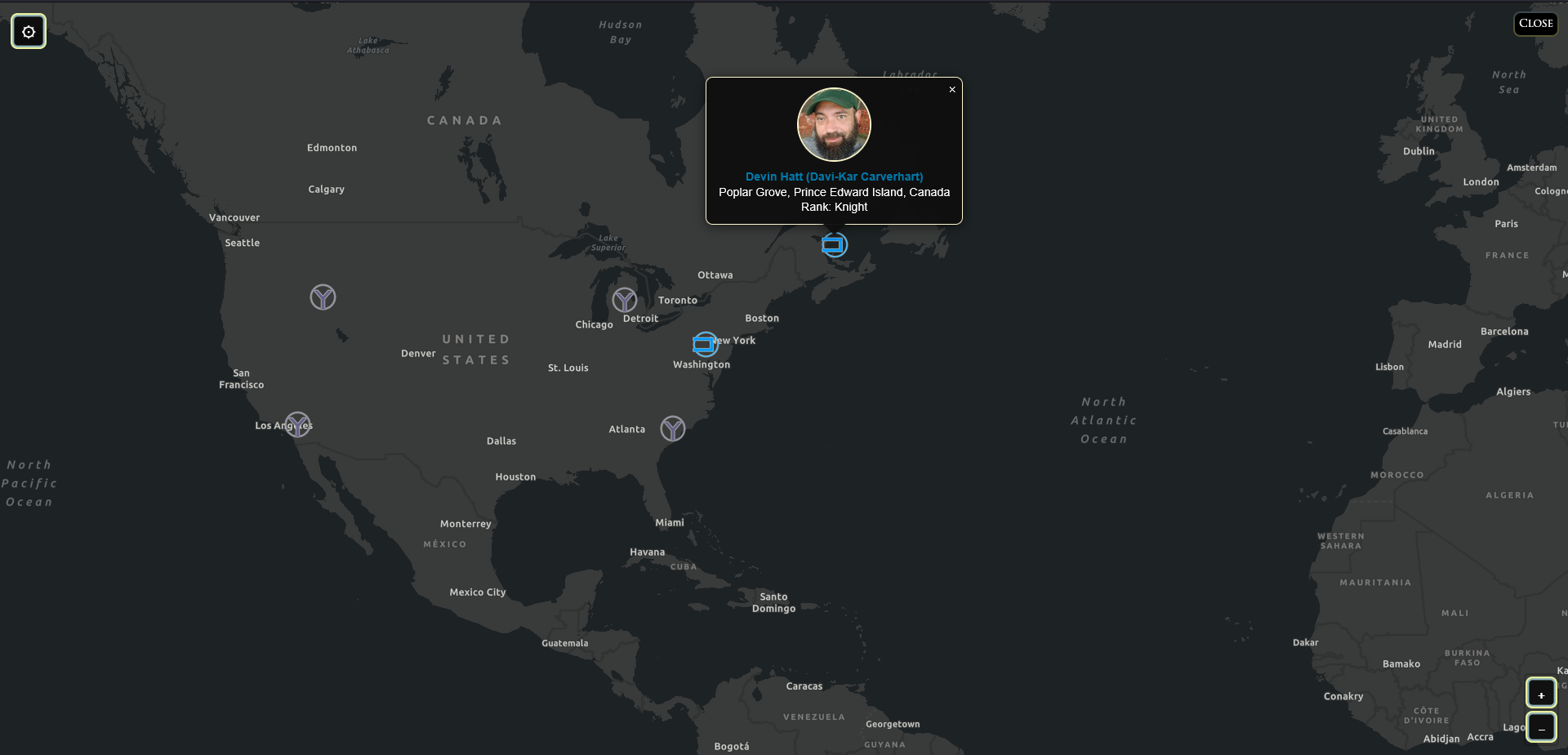
The Jedi Map gives members the option to share their location with other Jedi and see where members of the wider community are located around the world.
Location sharing is voluntary and intended to help Jedi discover nearby community, understand the geographic reach of the movement, and make connections that might otherwise never happen.
Members choose whether to share their location and control their own participation in the map.
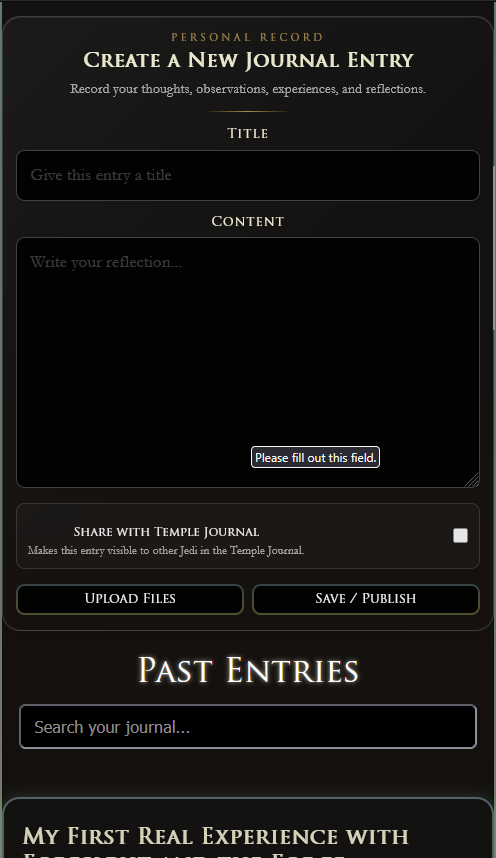
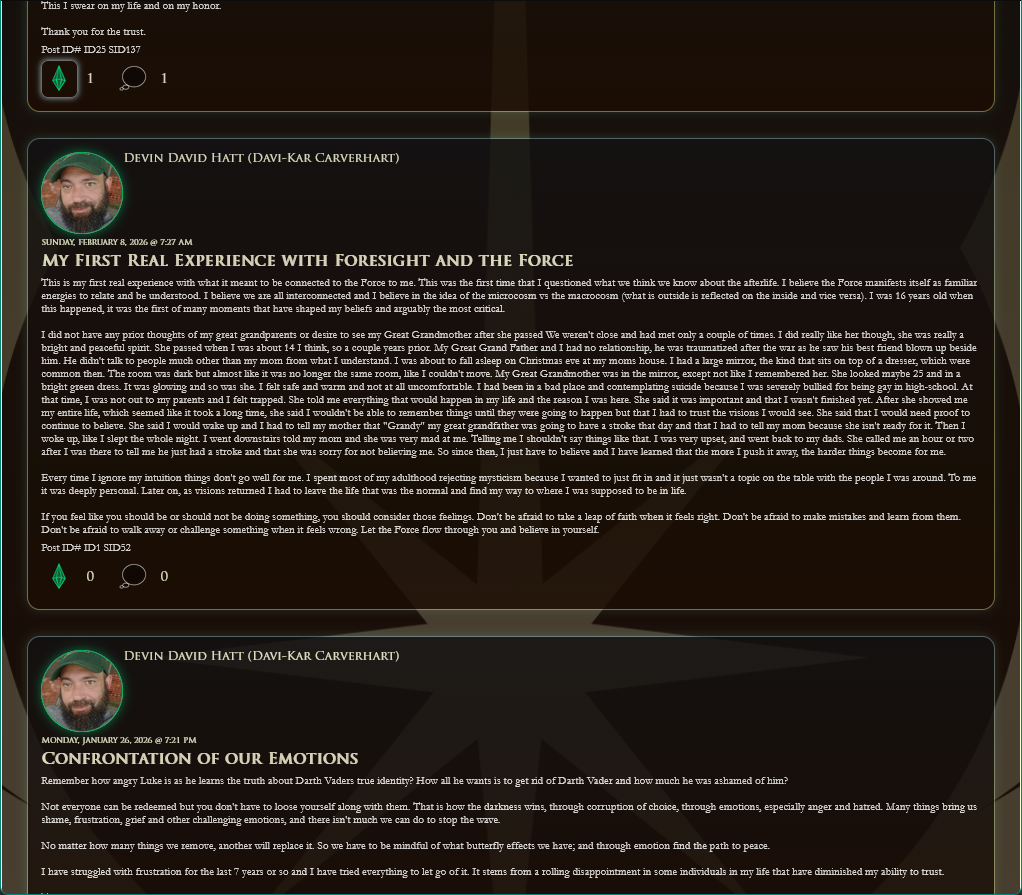
Personal journals support reflection and learning, while community journal features provide a private space for sharing ideas and discussion without depending entirely on public social-media platforms.
The installable web app already supports offline-oriented use in parts of the platform. Future archival tools are intended to give members more control over preserving their own Jedi history for later and offline access.
The Temple succeeds when Jedi knowledge becomes easier to learn, question, improve, preserve, and pass forward.